

Explore Sikkim
About Sikkim
Explore Sikkim – The Hidden Jewel of the Himalayas Sikkim, tucked away in the lap of the Eastern Himalayas, is a land of breathtaking beauty, vibrant culture, and spiritual serenity. Snow-capped peaks, cascading waterfalls, and peaceful monasteries make it one of India’s most enchanting destinations. From the serene lakes of Gangtok to the rugged trails of North Sikkim and the blooming valleys of Yumthang, every corner of Sikkim offers a new adventure. Witness the grandeur of Mount Kanchenjunga, stroll through colorful markets, or find peace at ancient monasteries surrounded by prayer flags. Sikkim is a perfect blend of nature, culture, and tranquility — an experience that stays with you long after you leave.
Available Packages
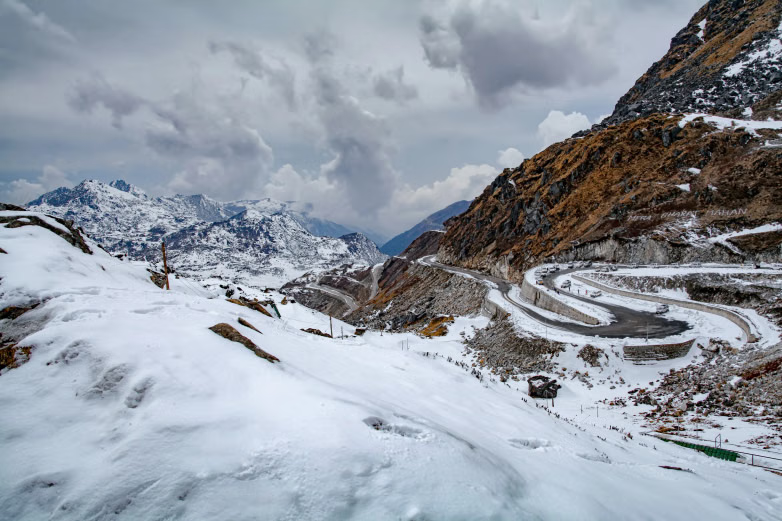
Highlights of North Sikkim | FREE Visit to Bhim Nala Falls
6 Days 5 Nights
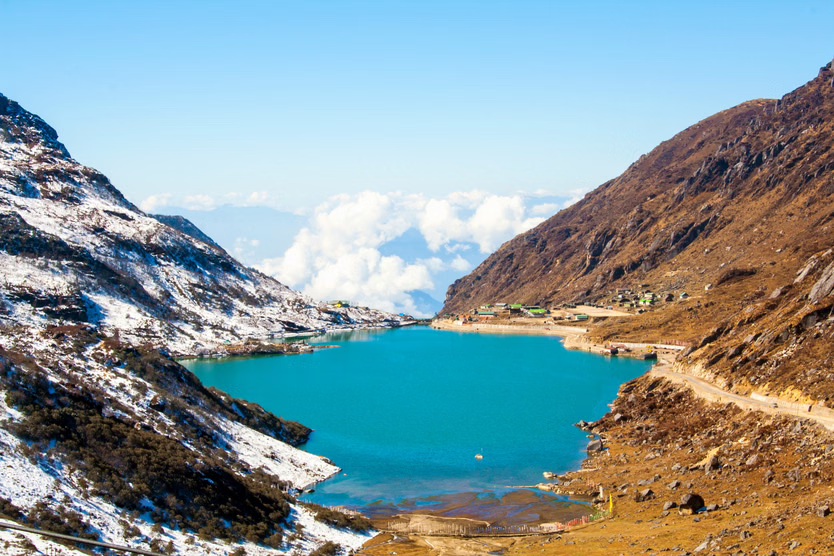
Sikkim Getaway with Yumthang Valley Tour
5 Days 4 Nights
Planning your Sikkim trip
Tucked into India's northeast where the borders of Nepal, Bhutan and Tibet meet, Sikkim packs glacial lakes, prayer-flag-draped monasteries and the snow wall of Kanchenjunga into one compact Himalayan state. A typical Sikkim tour package threads together the capital Gangtok, the high-altitude theatre of Tsomgo Lake and Nathula Pass, and the wildflower valleys of the remote north. It is one of the most accessible high-Himalaya escapes for Indian travellers, with no foreign visa required and a network of permits that registered local operators arrange for you.
Why visit Sikkim
Sikkim rewards travellers who want big mountain drama without leaving the country. From Pelling and Gangtok you get clear-day views of Kanchenjunga, the world's third-highest peak, glowing gold at sunrise. The state is famously clean and green, India's first fully organic state, and its Buddhist culture runs deep through monasteries like Rumtek, Pemayangtse and Tashiding.
The geography stacks several worlds into a short trip: subtropical valleys around Gangtok, alpine meadows in the north around Lachung and Yumthang, and a stark high-altitude landscape near Gurudongmar Lake at over 17,000 feet. For Indian travellers, the appeal is that all of this is reachable on a domestic identity with no foreign visa, just inner-line and protected-area permits handled by your tour operator.
Top highlights and experiences
Most packages combine a Gangtok-based eastern circuit with an excursion into the high north. The signature stops include:
- Gangtok — the lively capital, with the MG Marg pedestrian promenade, Enchey Monastery, ropeway rides and the launchpad for every other excursion.
- Tsomgo (Changu) Lake & Nathula Pass — a glacial lake at around 12,400 ft and the Indo-China border pass on the old Silk Route; both sit inside a protected zone needing special permits.
- Pelling — west Sikkim's viewpoint town for close, clear Kanchenjunga panoramas, plus the Pemayangtse Monastery and the glass Skywalk.
- Yumthang Valley & Lachung — the 'Valley of Flowers' in north Sikkim, ablaze with rhododendrons in spring and ringed by snow in winter.
- Gurudongmar Lake — a sacred, often-frozen high-altitude lake near the Tibet border, one of the highest lakes in the world reachable by road.
- Rumtek Monastery — the seat of the Karma Kagyu lineage and one of the most significant Buddhist monasteries in India.
Beyond the headline sights, Sikkim is great for momos and thukpa, the Temi tea estate, river-rafting on the Teesta and gentle treks. Adventurous travellers sometimes add the multi-day Goecha La or Dzongri trek for close Kanchenjunga views, which needs separate trekking permits and a good level of fitness.
How to reach Sikkim
Most trips route through the neighbouring Siliguri–Bagdogra corridor in West Bengal, then climb up to Gangtok on a scenic 4–5 hour drive along the Teesta river. Sikkim's own Pakyong Airport near Gangtok runs only limited, weather-dependent services, so the bulk of traffic still comes via Bagdogra.
- By air: Bagdogra Airport (near Siliguri) is the main gateway, with flights from Delhi, Mumbai, Kolkata and other metros; Pakyong Airport near Gangtok also operates limited services subject to weather.
- By train: New Jalpaiguri (NJP) is the nearest major railhead, well connected to Kolkata, Delhi and other cities, followed by a shared-jeep or private-car transfer to Gangtok.
- By road: shared sumos and private taxis run regularly between Siliguri/NJP/Bagdogra and Gangtok; most packages include this transfer.
Best time to visit Sikkim
| Season | Weather | Why go |
|---|---|---|
| March–May (Spring) | Mild, blooming | Peak season for rhododendrons and primulas; Yumthang Valley is in full flower and skies are often clear for Kanchenjunga. |
| June–September (Monsoon) | Wet, green, landslide-prone | Lush and lower-cost, but heavy rain triggers landslides and road closures, especially toward north Sikkim; mountain views are often clouded. |
| October–November (Autumn) | Crisp, very clear | Post-monsoon clarity gives the sharpest mountain views and stable roads; arguably the best window for photography and sightseeing from Pelling and Gangtok. |
| December–February (Winter) | Cold, snowy | Snow blankets the north and high passes for dramatic frozen lakes and fewer crowds, though Gurudongmar and Nathula may close on bad-weather days. |
Sikkim packages — FAQs
Do Indian travellers need a permit to visit Sikkim?
You don't need a visa, but Indian travellers do need protected-area or inner-line permits for restricted zones like Nathula Pass, Tsomgo Lake and north Sikkim (Lachung, Yumthang, Gurudongmar). These are arranged through registered tour operators and require ID proof and photos. Rules and closures change seasonally, so confirm current permit requirements before fixing your dates.
How many days are enough for a Sikkim trip?
A comfortable Sikkim package runs about 5–7 nights: roughly two nights in Gangtok with the Tsomgo Lake and Nathula day trip, two nights in north Sikkim for Yumthang and Gurudongmar, and a couple of nights in Pelling for Kanchenjunga views. Shorter 4-night trips work if you focus only on Gangtok and the east.
Is Sikkim safe and suitable for high-altitude travel?
Sikkim is one of India's safest and cleanest states. However, spots like Gurudongmar Lake (over 17,000 ft) and Nathula are at extreme altitude, so acclimatise gradually, stay hydrated, avoid alcohol the night before, and consult a doctor if you have heart or breathing conditions. Travellers with serious medical issues should be cautious about the highest excursions.
What is the best time to visit Sikkim?
March to May is ideal for rhododendron blooms in the Yumthang Valley, while October to December offers the clearest skies and sharpest Kanchenjunga views. Winter brings snow and frozen lakes in the north but occasional road closures, and the June–September monsoon is best avoided due to landslides.
How do I reach Sikkim from other parts of India?
Most travellers fly into Bagdogra Airport (near Siliguri, West Bengal) or arrive by train at New Jalpaiguri (NJP), then drive 4–5 hours to Gangtok. Pakyong Airport near Gangtok has limited weather-dependent flights. Bagdogra has connections from Delhi, Mumbai, Kolkata and other major cities.
Can foreign tourists join a Sikkim tour package?
Yes, but foreign nationals need a separate permit to enter Sikkim plus additional permits for north and east Sikkim, and some border zones like Nathula and Gurudongmar may be off-limits to foreign passport holders. Indian and foreign permit rules differ, so foreign travellers should check the latest restrictions with their operator before booking.