

Explore Norway
About Norway
Discover Norway – Land of Fjords and Northern Lights Norway is a land of breathtaking natural beauty, where majestic fjords, towering mountains, and serene lakes create a picture-perfect landscape. From the iconic Geirangerfjord and Lofoten Islands to the charming streets of Oslo and Bergen, Norway offers a harmonious blend of adventure, culture, and tranquility. Witness the mesmerizing Northern Lights, cruise through pristine fjords, hike scenic trails, or explore quaint villages steeped in history. Every journey through Norway promises awe-inspiring views and unforgettable experiences.
Available Packages
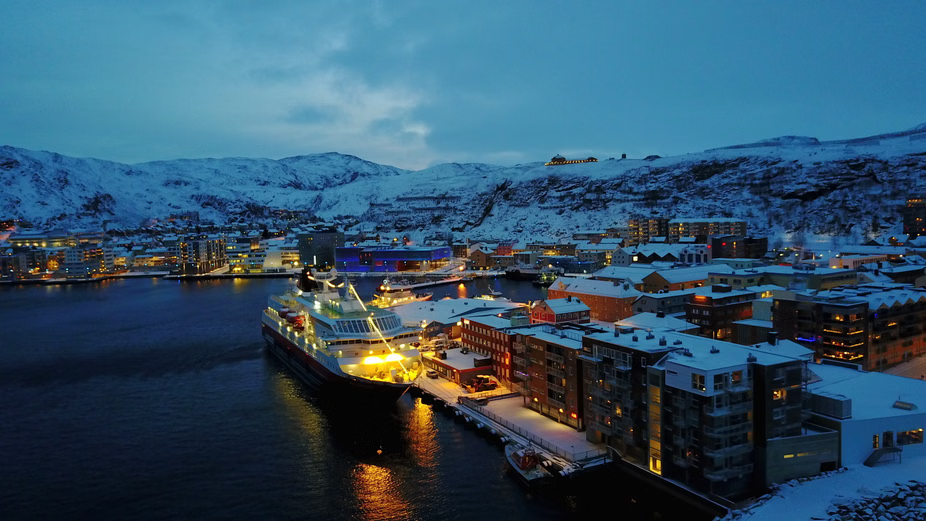
Arctic Norway | Winter in Wonderland
7 Nights 8 Days

Best of Nordic | Exploring Sweden, Denmark, Finland and Norway
10 Nights 11 Days
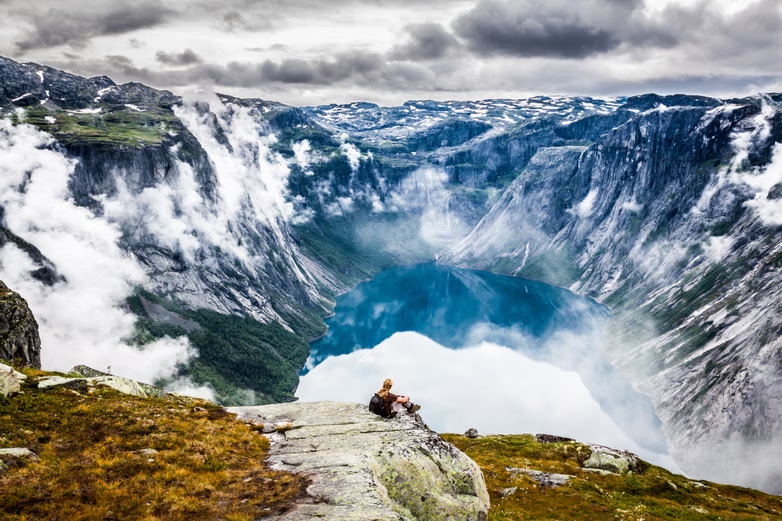
Norway in a Nutshell with FREE Fjord Cruise Ride
7 Nights 8 Days
Planning your Norway trip
Few countries pack as much drama into one trip as Norway — glassy fjords carved between sheer cliffs, fishing villages strung across the Arctic, and skies that either never darken in summer or shimmer green in winter. From Oslo and the wooden wharves of Bergen to the Lofoten Islands and the aurora over Tromso, a Norway trip rewards travellers who plan around the seasons. Most Norway tour packages for Indian travellers combine a fjord region with one Arctic highlight, so the right itinerary depends entirely on when you go.
Why visit Norway
Norway is built around water and light. Its western coast is folded into deep fjords — the UNESCO-listed Geirangerfjord and Naeroyfjord among them — where waterfalls drop straight into the sea and small ferries glide past farms clinging to the slopes. Inland, the scenery flips between forest, glacier and high plateau, all linked by some of the most scenic rail and road journeys in Europe.
The other reason people come is the sky. North of the Arctic Circle, summer brings the midnight sun, when daylight lasts around the clock and hikes can start at midnight. In winter the same latitudes turn dark enough for the Northern Lights, making places like Tromso and the Lofoten Islands prime aurora-hunting bases. For Indian travellers used to warm beach holidays, Norway offers a completely different palette: cool, clean and quietly spectacular.
Top highlights and experiences
A well-planned Norway itinerary usually mixes a city, a fjord and one Arctic experience. These are the anchors most travellers build around:
- Fjord country — cruise the Geirangerfjord and Naeroyfjord, two of the most celebrated fjords, ideally via the famous Flam Railway, one of the steepest standard-gauge train lines in the world.
- Bergen — wander Bryggen, the colourful old Hanseatic wharf, then ride the Floibanen funicular up for views over the harbour; Bergen is also the classic gateway to the fjords.
- Oslo — Norway's relaxed capital, good for a day or two of museums, the Opera House rooftop walk and the waterfront before heading west or north.
- Lofoten Islands — dramatic peaks rising straight from the sea above red-and-white fishing cabins (rorbuer); stunning under both the midnight sun and the aurora.
- Tromso — the lively Arctic hub for winter Northern Lights tours, dog-sledding and whale-watching in season.
- Pulpit Rock (Preikestolen) — an iconic flat-topped cliff high above the Lysefjord, reached by a popular day hike in the warmer months.
Outside these icons, Norway rewards slow travel: scenic drives like the Atlantic Road and Trollstigen, coastal voyages along the working ferry routes, and quiet villages where the main event is simply the view.
How to reach Norway and get around
There are no direct flights from India to Norway, so most travellers connect once through a European or Gulf hub before landing at Oslo, with onward domestic flights to Bergen, Tromso or other regional airports. Flying internally is common in Norway because the country is long and mountainous — a domestic hop to the Arctic saves a great deal of overland time.
On the ground, Norway is extremely well connected by train, bus, ferry and the coastal route along the western seaboard. Scenic journeys such as the Bergen Railway and Flam Railway are attractions in their own right, while ferries are simply part of everyday travel between fjord-side towns. Self-driving is rewarding in summer but demands care on narrow mountain roads, and winter driving in the far north is best left to guided transfers.
Visa and trip planning for Indians
Norway is part of the Schengen Area, so Indian passport holders need a Schengen visa to visit. Rules, required documents, fees and processing times change periodically, so always check the current Schengen visa requirements through the official Norwegian visa channel or an authorised application centre, and apply well ahead of your travel dates — appointment slots can fill up in peak season.
Pack for the season and the latitude: layers, waterproofs and sturdy footwear for fjord and mountain weather even in summer, and proper insulated gear for an Arctic winter trip. Weather changes fast in the mountains and on the coast, so build a little flexibility into any aurora chase — clear skies are never guaranteed on a single night, and multi-night Northern Lights itineraries improve your odds.
Best time to visit Norway
| Season | Weather | Why go |
|---|---|---|
| Apr (Early spring) | Thawing, unpredictable, quiet | A transition month — some high passes and trails may still be closed, but cities and lower fjords reopen with low crowds and good value. |
| May (Late spring) | Cool, changeable, fewer crowds | Great value before peak season: waterfalls run strong from snowmelt, fjord towns feel calm, and the midnight sun begins in the far north late in the month. |
| Jun-Aug (Summer) | Long mild days, midnight sun in the north | Peak season for fjord cruises, the Flam Railway, Pulpit Rock hikes and Lofoten under endless daylight; warmest and greenest, but busiest and priciest. |
| Sep (Early autumn) | Crisp, colourful, calmer | Autumn colours arrive and crowds thin, while the aurora season begins in the north — a good shoulder window combining fjords with early Northern Lights chances. |
| Oct-Mar (Aurora season) | Dark Arctic nights, cold and snowy | Prime time for the Northern Lights around Tromso and Lofoten, plus dog-sledding and snowy landscapes; the far north sees polar night, so plan guided transfers and serious winter gear. |
Norway packages — FAQs
Are there direct flights from India to Norway?
No, there are currently no direct flights from India to Norway. Travellers usually take a one-stop connection through a major European or Gulf hub to reach Oslo, then often take a domestic flight onward to Bergen, Tromso or the fjord and Arctic regions.
Do Indians need a visa for Norway?
Yes. Norway is in the Schengen Area, so Indian passport holders need a Schengen visa. Visa rules, fees and processing times change, so check the current Schengen visa requirements via the official Norwegian visa channel or an authorised application centre and apply well in advance, as peak-season slots fill quickly.
What is the best time to see the Northern Lights in Norway?
The aurora season runs roughly from late September to March, when Arctic nights are long and dark. Tromso and the Lofoten Islands are popular bases. Sightings depend on clear skies and solar activity, so a multi-night itinerary improves your chances — no single night is ever guaranteed.
When can I experience the midnight sun?
The midnight sun occurs in summer, broadly from late May to mid-July north of the Arctic Circle, when the sun stays above the horizon around the clock. It is one of the main reasons to visit Lofoten and the far north in June and July.
How many days do you need for a Norway trip?
Around 7 to 10 days suits most first-time visitors, enough to combine a city like Oslo or Bergen with a fjord region and one Arctic highlight. If you want both the fjords and a dedicated Northern Lights or Lofoten leg, 10 to 14 days is more comfortable.
Is Norway expensive to travel in?
Norway is one of Europe's more expensive destinations, with higher costs for food, transport and accommodation. It uses the Norwegian krone rather than the euro. Card and contactless payments are accepted almost everywhere, and planning routes around scenic trains and ferries helps manage both budget and time.